
Do not ask only “How much?” and “When can you start?” The better questions reveal what is included, how the carpenter thinks, what evidence supports their promises and how the project will be controlled when real site conditions differ from the plan.
The five answers you need before committing
You should be able to explain the exact scope, total price basis, likely timing, who is responsible for each decision and what happens if the work changes. If any one of those remains vague, ask for clarification before accepting the quotation.
1. Have you completed work similar to mine?
A good answer should include: recent, relevant examples—not just a large general gallery. Ask what was comparable in scale, materials, property type or technical difficulty and what the carpenter personally delivered.
How Sixes addresses it: the project journal separates fitted interiors, kitchens, renovations, structural roofs and new-build timber work so you can inspect evidence that matches your project. Start with our project journal and the relevant service page.
2. What exactly is included—and excluded?
A good answer should include: the areas of work, preparation, supply responsibilities, installation, making good, waste, finishing and any tasks left to another trade. “Fit kitchen” can mean very different things depending on whether units, worktops, boxing, skirting, doors, service coordination and finishing are included.
How Sixes addresses it: the first conversation gathers the project location, work required, timing and useful plans or photographs. The quotation can then be tied to a defined scope rather than a single unexplained figure.
3. Is this a quotation or an estimate?
A good answer should include: which document you are receiving, how long the price remains valid and which assumptions could change it. Citizens Advice explains that a quote and an estimate are not the same and recommends getting the important details in writing.
How Sixes addresses it: Sixes offers a free, no-obligation quotation. Any unresolved information that materially affects the work should be identified rather than silently treated as fixed.
4. Are you insured, and what guarantee applies?
A good answer should include: the type of insurance held, current evidence when appropriate and a clear explanation of what any guarantee covers, for how long and subject to which conditions.
How Sixes addresses it: Sixes Carpentry states that it is fully insured and that all work is guaranteed. The guarantee relevant to a particular scope can be discussed with the quotation, avoiding assumptions that one sentence applies identically to every project.
5. Do we have the drawings and approvals needed?
A good answer should include: whether architectural, structural or manufacturer information is required and who is obtaining it. A carpenter should not improvise structural design that belongs with a qualified designer or ignore applicable approvals.
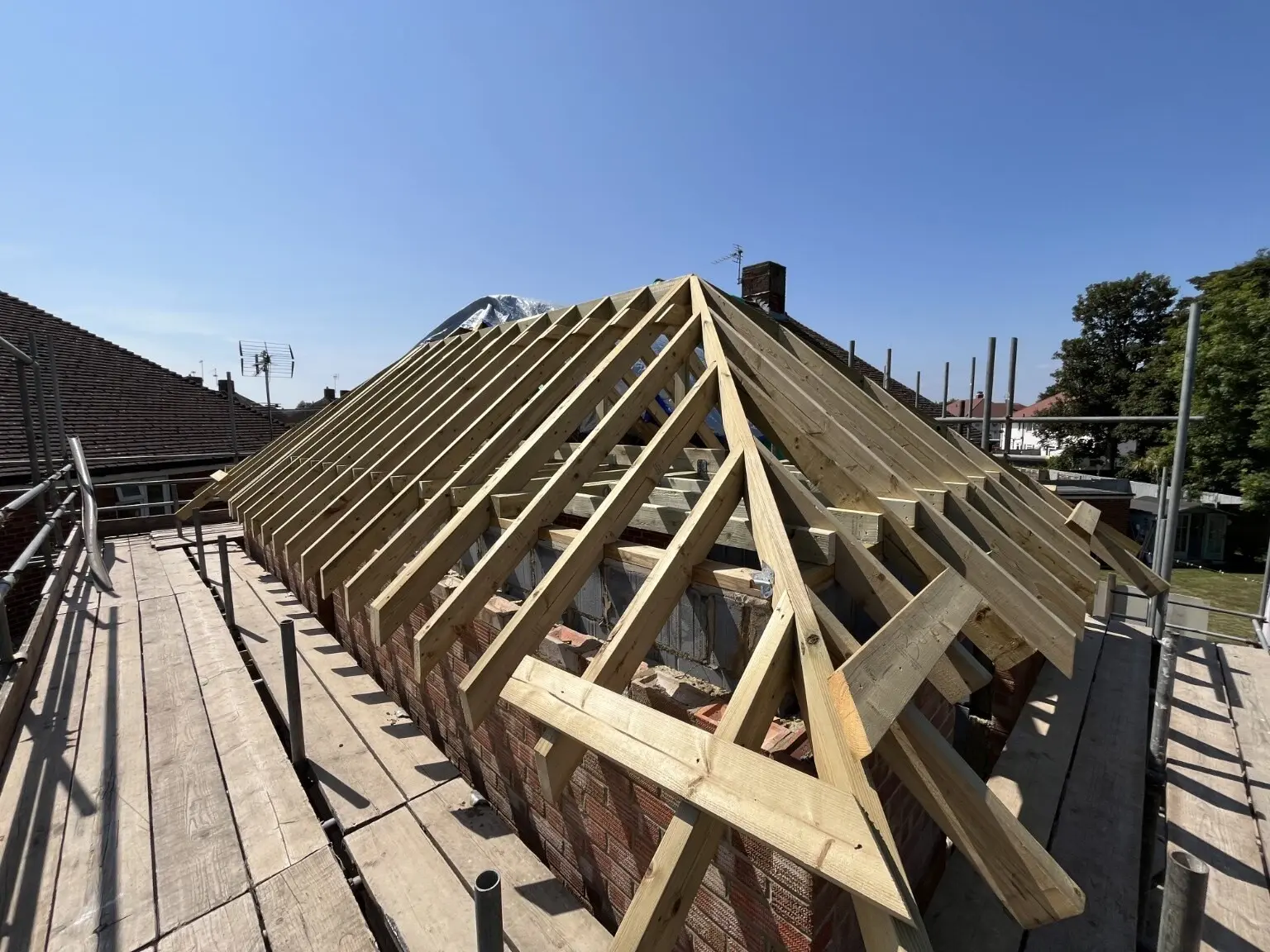
How Sixes addresses it: structural carpentry is described as work built to drawings and coordinated on site. Where existing conditions conflict with limited information, the issue should be raised and resolved through the appropriate route before critical work proceeds.
6. Who will complete and supervise the work?
A good answer should include: whether the person quoting will be on site, whether others will assist or subcontract, and who remains responsible for quality, access and decisions. On a larger project, ask who coordinates the interfaces between trades.
How Sixes addresses it: Sixes positions the work around one accountable standard from structural stages through fitted finishes. The people and responsibilities for your actual project should still be agreed before starting.
7. How will materials and finishes be chosen?
A good answer should include: who specifies and orders materials, acceptable samples or drawings, lead times, storage, moisture or acclimatisation needs and what happens if a chosen item becomes unavailable.
How Sixes addresses it: dimensions, proportions, materials and finish preferences can be reviewed before work begins. For bespoke work, the room drives the design; for structural work, the specification and drawings drive the installation.
8. What existing-property risks do you see?
A good answer should include: known access restrictions, uneven walls or floors, concealed services, previous alterations, damp or damaged timber, and areas that cannot be assessed until opening up. No responsible contractor can promise that an old property contains no surprises.
How Sixes addresses it: the published Bognor Regis renovation explains how difficult walls, access, budget and programme affected the work. The useful promise is not “nothing will change”; it is that conditions and options are discussed clearly.
9. What is the realistic programme?
A good answer should include: an intended start window, expected duration, working pattern, material lead times, decisions needed from you and dependencies on drawings or other trades. Ask what could alter the dates and how you will be updated.
How Sixes addresses it: sequencing is part of the service language across extensions, kitchens and first fix. Timing begins with your rough project window, then becomes more specific as the scope and dependencies are confirmed.
10. How will we communicate and record decisions?
A good answer should include: the main contact, a sensible update rhythm and a written method for important approvals. A quick site conversation can still be confirmed by email or message so neither party has to rely on memory.
How Sixes addresses it: clear communication is one of the business’s stated working standards. For your project, agree the practical method and who has authority to approve a change.
11. How are variations and extra work handled?
A good answer should include: the reason for the change, revised scope, cost and timing impact, with your approval before work proceeds wherever practicable. Also ask how urgent safety or protection work would be managed if it cannot reasonably wait.
How Sixes addresses it: site conditions and project changes should be explained as practical options rather than added as an unexplained total at the end.
12. What deposit and payment schedule do you require?
A good answer should include: the amount, due dates, what each payment relates to, accepted method and invoice details. Larger projects may use staged payments; the important point is that the schedule is proportionate, documented and connected to the agreed work or materials.
How Sixes addresses it: payment terms for your project should be confirmed with the written quotation. Sixes does not publish a generic payment schedule because the appropriate structure can differ by scope and material commitment.
13. How will you protect the home and manage waste?
A good answer should include: access routes, floor or adjacent-finish protection, dust control, tool and material storage, daily close-down and who removes project waste. The answer should fit the job rather than promise a dust-free building process.
How Sixes addresses it: care at handover is part of the stated standard. Project-specific protection and waste responsibilities should be included in the pre-start conversation and scope.
14. How do you check workmanship and deal with snagging?
A good answer should include: checks during setting-out and hidden stages, not only a final visual glance. Ask how alignments, fixings, operation, junctions and finishes are reviewed and how an agreed snag is recorded and completed.
How Sixes addresses it: the portfolio shows work from frame and first fix through finished cabinetry. Fine workmanship means accurate underlying work, well-resolved details and a final result that performs as intended.
15. Can I see references, reviews or comparable case studies?
A good answer should include: genuine, recent evidence with permission to share it. A contractor should not disclose private customer details without consent, but should be able to point to suitable public work or arrange an approved reference where available.
How Sixes addresses it: Sixes uses its own project images and location-specific case studies instead of stock claims. Browse the journal, then ask which examples are closest to your proposed work.
Your copy-and-save hiring checklist
- Comparable work and evidence reviewed.
- Written scope, inclusions and exclusions understood.
- Quotation versus estimate confirmed.
- Insurance and project guarantee discussed.
- Drawings, approvals and design responsibility clear.
- Site team and supervision identified.
- Materials, finish and supply responsibility agreed.
- Existing-property risks recorded.
- Programme and dependencies understood.
- Communication method agreed.
- Variation process agreed in writing.
- Deposit and payment stages recorded.
- Protection, access and waste responsibilities clear.
- Quality checks and snagging route understood.
- Recent evidence or references checked.
Frequently asked questions
What is the most important question to ask a carpenter?
Ask what is included and excluded from the written quotation. This reveals whether both parties understand the same scope, materials, preparation and responsibilities.
Should a carpenter provide insurance details?
A carpenter should be able to explain the insurance held and provide current evidence when it is relevant to the project.
How should extra work be agreed?
The reason, scope, price and effect on timing should be explained and approved in writing before the additional work proceeds wherever practicable.
What should I ask about workmanship?
Ask to see comparable recent work and ask how the carpenter checks setting-out, hidden support, junctions, protection and final snagging for your type of project.
This checklist is general homeowner guidance, not legal advice. External consumer guidance was checked on 1 September 2026. Confirm the written terms, approvals and responsibilities that apply to your own project.
Send your project location, timing, photographs and drawings so the first conversation can focus on the real scope.