
Second fix is the stage where accuracy becomes visible. The structural work may already define the rooms, but it is the doors, architraves, skirting and staircase junctions that determine whether the finished interior feels consistent. These photographs show work completed by Sixes Carpentry on a new-build site in Littlehampton, before final decoration and handover.
What the second-fix work involved
Our work covered the internal carpentry visible throughout the plot: hanging the doors, fitting the architraves and installing moulded skirting through bedrooms, bathrooms, the landing and staircase areas. The package also involved finishing neatly around wall returns and service boxing, where standard lengths of trim have to be adapted to the building rather than simply fitted in a straight run.
The site was still moving through its wider finishing programme. Protective coverings remained on the floors and other trades were completing their own work, so the carpentry had to be carried out methodically and left ready for decorators and the final snagging stage.
Getting the door openings right
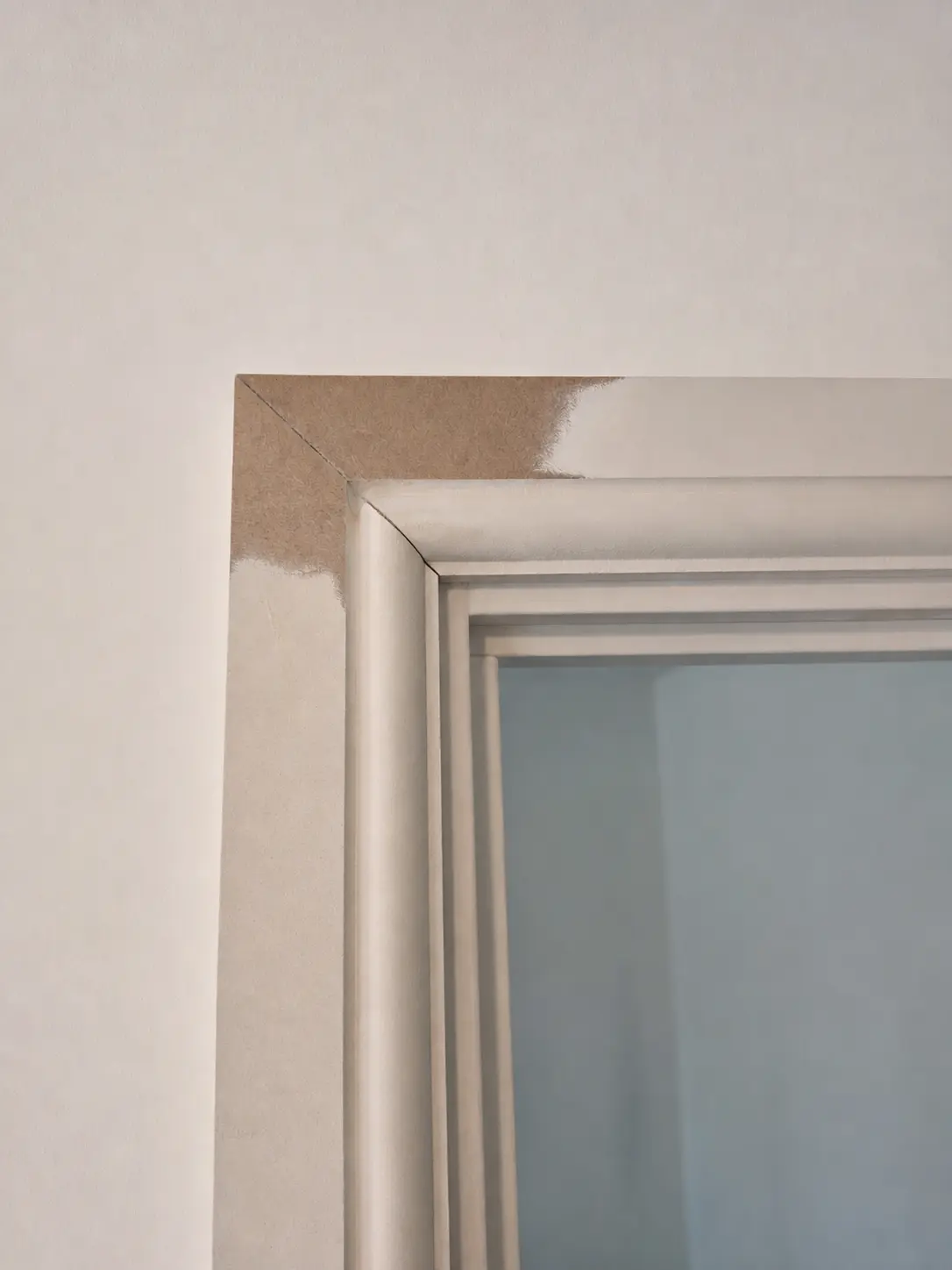
A well-fitted door starts with the lining. Before the architrave goes on, the lining needs to be checked for plumb, straightness and square so the door can operate correctly and maintain consistent clearances. The doors shown here were hung within the prepared openings, with the architrave fitted around the lining to cover the joint with the surrounding wall.
Repeating that standard across several rooms matters. Small variations are noticeable when a series of doors can be seen from the same landing, so the head details, vertical lines and margins all need to read consistently.
Skirting, corners and difficult junctions
Skirting looks straightforward until it reaches a corner, door casing, stair string or boxed service. The moulded profile has to continue cleanly while the joint remains tight and the top edge follows the room at a consistent height. External corners were mitred, while short sections around the bathroom boxing were measured and fitted to suit the available space.
These close details are a useful record of genuine second-fix carpentry. They show the work before the final decorating process, rather than presenting the property as a completed interior.
Second-fix carpentry across the plot


Ready for decoration and final snagging
Once the carpentry package was complete, the internal doors, architraves and skirting gave the property a consistent second-fix finish. The remaining decorating and final-site work could then proceed around clearly established lines and junctions.
For housebuilders and main contractors, this is where dependable workmanship and straightforward coordination make a practical difference. A second-fix carpenter needs to work accurately, protect the surrounding work and leave each plot ready for the trades and inspections that follow.
Project location: Littlehampton, West Sussex. Photographs show genuine site work before final decoration and handover.